Sunday, 21 December 2014

The Battle of Chemulpo - 9th February 1904


Despite all the attention it has received from historians, the attack on Port Arthur was just a covering operation for the real target of Japan's opening move of the war, the invasion of Korea at Chemulpo. This critical operation was given to Rear Admiral Uriu Sotokichi.

The approach to the port lies between two islands, Richy to the north and Yung-hung-do to the south. Off the south coast of Richy lies the small Philip Island, and north of Yung-hung-do are reefs ending in the Pender Rock. Between this rock and Philip Island is a fairway nearly four miles wide. About three miles inside this line lays the Island of Yodolmi, and here begins the real entrance to the port, a channel nearly ten miles long running roughly northeast up to the place where Rear Admiral Uriu intended to land his troops.


About seven miles up the channel from Yodolmi the Russian cruiser Varyag and gunboat Korietz were anchored. Just to make matters more interesting four neutral vessels were also present in the anchorage, Talbot (Great Britain), Pascal (France), Elba (Italy) and Vicksburg (United States). Uriu reasoned that if the Russians remained where they were, in the midst of the neutral ships, they could not possibly attack his transports and if they came out to do battle he had ample force to destroy them.

Uriu ordered Chiyoda, Takachiho, Asama and the torpedo boats to proceed up the channel with the troop-ships to commence the debarkation at once while Naniwa, Niitaka and Akashi lay to the westward of Yodolmi Island.

The Japanese advance detachment entered Chemulpo and moored near the Russians, while the soldiers streamed ashore in disembarkation operations that continued through that night in which Togo's declaratory assault was being delivered at Port Arthur. To the amazement of the tense Japanese, Varyag and Korietz seemed as phlegmatic and casual as usual, airing out bunting and leaving out booms as though all were well in the affairs of nations.

By the next morning the transports had discharged their passengers and withdrawn from the harbor, along with all of the Japanese men-of-war excepting Chiyoda. The latter delivered to Captain Rudneff of Varyag an ultimatum from Admiral Uriu to vacate the harbor by noon and to the commanding officers of the neutral warships a request that they shift their berths to a safe corner. Talbot's skipper was the future Admiral Sir Lewis Bayly and, despite the Anglo-Japanese Alliance and its unwritten implications, he protested as senior officer present against any violation of Korean neutrality, a measure in which the American captain refused to join.

Rudneff spared Uriu the necessity of making a decision with respect to a harbor attack. Declining to be trapped like a bird in a cage, he resolved to make a hopeless break for the open sea.

True to the general conditions prevailing in the Russian Navy, Varyag was able to attain a scant two-thirds of her maximum speed. Korietz was even slower and of no combatant value anyway but bravely insisted upon tagging along. In formidable array stood the Japanese cruisers. Asama alone was capable of disposing of the weaker Russians but Togo, like Fisher in dispatching Invincible and Inflexible to sink Von Spee's inferior squadron, purposely had sent a force that he was sure would be overwhelming.

Shortly after noon, Korietz started down the channel directly past the Japanese line and soon was overtaken by Varyag. The Japanese had nothing to worry about. They let Asama's 8" rifles do the heavy damage of which they were capable at a range reasonably safe from Varyag's wildly inaccurate return fire. The other Japanese cruisers, particularly the flagship Naniwa, contributed superfluous support and attacked Korietz without effect.

The latter kept partly behind the shelter of one of the islands in the vicinity and in mid-afternoon she followed the battered Varyag back to the harbor, where both took refuge near the neutral warships. Their crews then scuttled the ships. That Varyag had been able to limp back to port with her slaughtered complement and shattered hull was a wonder.


The ships that needed to be painted were not in extravagant numbers but enough to make an appreciable number. The Russians were only represented by the IRN Varyag with assistance rendered by an old gunboat; the IRN Korietz and notification brought to the Chemulpo anchorage by the merchant vessel IRN Sungari.

Within the anchorage itself were a number of other blue water vessels as well as a plethora of smaller fishing boats and other smaller merchant vessels. The neutral flotilla consisted of Great Britain's protected cruiser HMS Talbot, Frances protected cruiser the Pascal, the Italian protected cruiser ITS Elba, a modern Korean gunboat called IKN Yobu and a  small flotilla from the United States consisting of the aged Corvette USS Vicksburg and the Colliers USS Pompey and USS Zafiro.


The Imperial Russian Flotilla present at Chemulpo Anchorage


OCR IRN Varyag


GB IRN Korietz


The Neutral Flotilla present at the Chemulpo Anchorage


OCR HMS Talbot


OCR ITS Elba


OCR Pascal


The United States' neutral flotilla


OCR USS Vicksburg


AC USS Pompey 


AC USS Zafiro

The painting of the Russian vessels was as per the previous blogs, with the colours used reflecting those used by the Russian 1st Pacific squadron which is where the ships came from.

The neutral vessels required a little more attention though. The greys and ochres of the British, Italian and French vessels was the same painting techniques as used on the Russian 2nd and 3rd Pacific squadrons.

The hallmark of the American vessels at this time were the white hulls but as always with miniatures at this scale, just painting them a flat white leads to a remarkably flat and boring vessel to look at.

I opted for a base coat of a US Pale Blue Grey followed by straking the surfaces with slightly opaque Brilliant White.

All other surfaces were painted as previously described...


Sunday, 14 December 2014

The Floating Defence of Vladivostok

In 1904 the main armoured cruiser squadron was based at Vladivostok. Consisting of 4 of the most modern heavy cruisers in the world from here they sallied forth hunting down Japanese shipping whenever they could.

Large, modern and heavily armed & armoured these ships were an impressive element and once Port Arthur fell in early 1905 it became Rozhestvensky's fleet objective to link up with this squadron in order to seek a showdown with the Japanese Combined Fleet under Admiral Heihachiro Togo.

In the pre-dreadnought era it was the armoured cruisers that were the real killers of the battle fleets. Battleships had not yet been able to carry fire control systems that were developed enough to carry the weight of battles on their long range shoulders and it was instead the secondary medium range batteries that were able to strip an enemy ships superstructure to the ribbing and eliminate the enemy vessel as an opponent. The Armoured Cruisers of protagonists fleets didn't mount the heavy guns of the Battleships but more than made up for it with an abundance of these medium batteries.

Vladivostok also had a few tricks up its sleeves during this period though, including a small Submarine Flotilla and a small array of Torpedo Boats and Gunboats for close in defence.


Vladivostok Squadron
(OCR Gromoboi, OCR Rossiya, OCR Ryurik & OCR Bogatyr)


OCR Gromoboi


OCR Ryurik


OCR Bogatyr


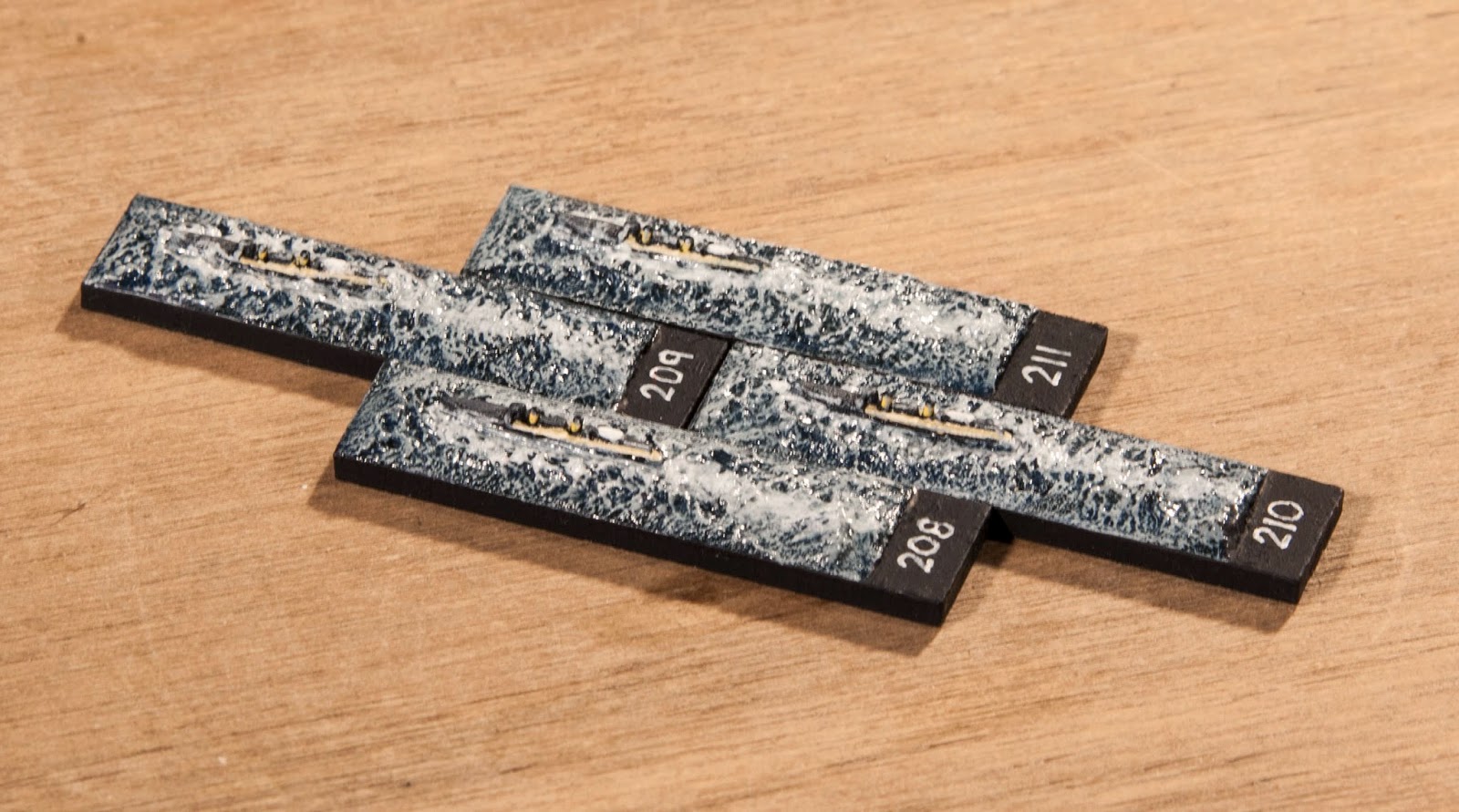
1st Torpedo Boat Division
(No 201 - 206)


2nd Torpedo Boat Division
(No 208 - 211)


Submarine Delfin

The Vladivostok Squadron was reported to have been painted in browns and in line with that I've painted the Armoured Cruiser squadron in browns with a hint of reds.

The smaller vessels of the Floating Defence were painted as all of the other ships were. A mixture of blacks, greys and browns depending on my inclination.

The sea bases are what I feel give my fleets the character I was looking for. The bases themselves are standard MDF hardboard. 50mmx25mm for the main line ships and 30mmx10mm for the smaller vessels.

These bases, in groups of 3 or 4 had a layer of Wall Tile Grout put onto them and allowed to dry until the surface became tacky to the touch. A soft toothbrush was then used to dapple the surface and in some case pull it in the direction of the waves and/or wake. A small section at the back of the base had the grout stripped from it to provide for a name plate to be painted on.

Once this was done the vessel to be mounted was pushed down and slightly forwards into the grout to build up a bow wave and get the lower edge of the vessel down into the grout.

These were then left to dry.

The bases were given a complete covering of black and left to dry

Once dry again a covering of Deep Sea Blue was given to the water surface with oil spot patterns of Prussian Blue over the top of this.

The next layer was a moderate dry brushing of US Blue Grey Pale.

This was added to with a light surface dry brush of brilliant white with which the bow wake and wave peaks were also picked out with.

The whole base (but not the ships) were then given a heavy coat of gloss varnish.

Once this was totally dry the base edges and name plate were given another black coat and the name picked out in white on the name plate.

Done! Finished! Ready to rock and roll...

The Imperial Russian 1st Pacific Squadron

So last week we took a look at the 2nd and 3rd Pacific Squadrons that managed to sail all the way around the world only to fall to the guns of Togo's Combined Fleet so comprehensively that it knocked Russia out of the war. Japan, until then a backwater agrarian nation of farmers suddenly became a world power having cowed two major world powers in a single decade.

But what of the 1st Pacific Squadron? The ships that were originally stationed in the Far East to keep the peace and enforce Russian expansionist policies?

These ships were split between two deep water harbours; Vladivostok and Port Arthur on the Liaoyang peninsular.Vladivostok spent much of the year locked up in deep ice restricting shipping but Port Arthur was viable all year round and was protected by steep hillsides on all sides of the harbour basin. Russia took this harbour as a concession from China and was unfortunately not able to finish preparing her for war before the Russo-Japanese War broke out in February 1904. It only had one dry dock which wasn't big enough to carry the big battleships, meaning only the smaller vessels could have below waterline hits effectively repaired.

The Russian Battleship Division was stationed at Port Arthur along with a wide range of Cruisers, Gunboats, Torpedo Boats and Destroyers. Pound for pound it was the most powerful navy in the East at this time...


Battleship Division 1st Sub Division 
(OBB Tsarevich, OBB Petropavlovsk, OBB Sevastopol & OBB Poltava)


OBB Petropavlovsk


OBB Tsarevich


Battleship Division 2nd Sub Division 
(OBB Retvizan, OBB Pobyeda & OBB Peresvyet)


OBB Peresvyet


OBB Retvizan

The two battleship divisions were the backbone of the Russian 1st Pacific Squadron but they were ably supported by a large division of Long Distance Scouts, responsible for patrolling the sea lanes and intercepting any hostile activity far enough away to provide suitable notice to the fleet. They were also supported by a small division of short distance scouts that patrolled the sea lanes closer to the harbour and acted in the capacity of dispatch vessels..


Division of Long Distance Scouts 
(OCR Askold, OCR Bayan, OCR Diana & OCR Pallada)


OCR Askold


OCR Bayan


OCR Pallada


Division of Short Distance Scouts 
(OCR Boyarin & OCR Novik)

These were the main battle line vessels of the 1st Pacific Squadron but they did not act alone, with a plethora of smaller vessels supporting them.


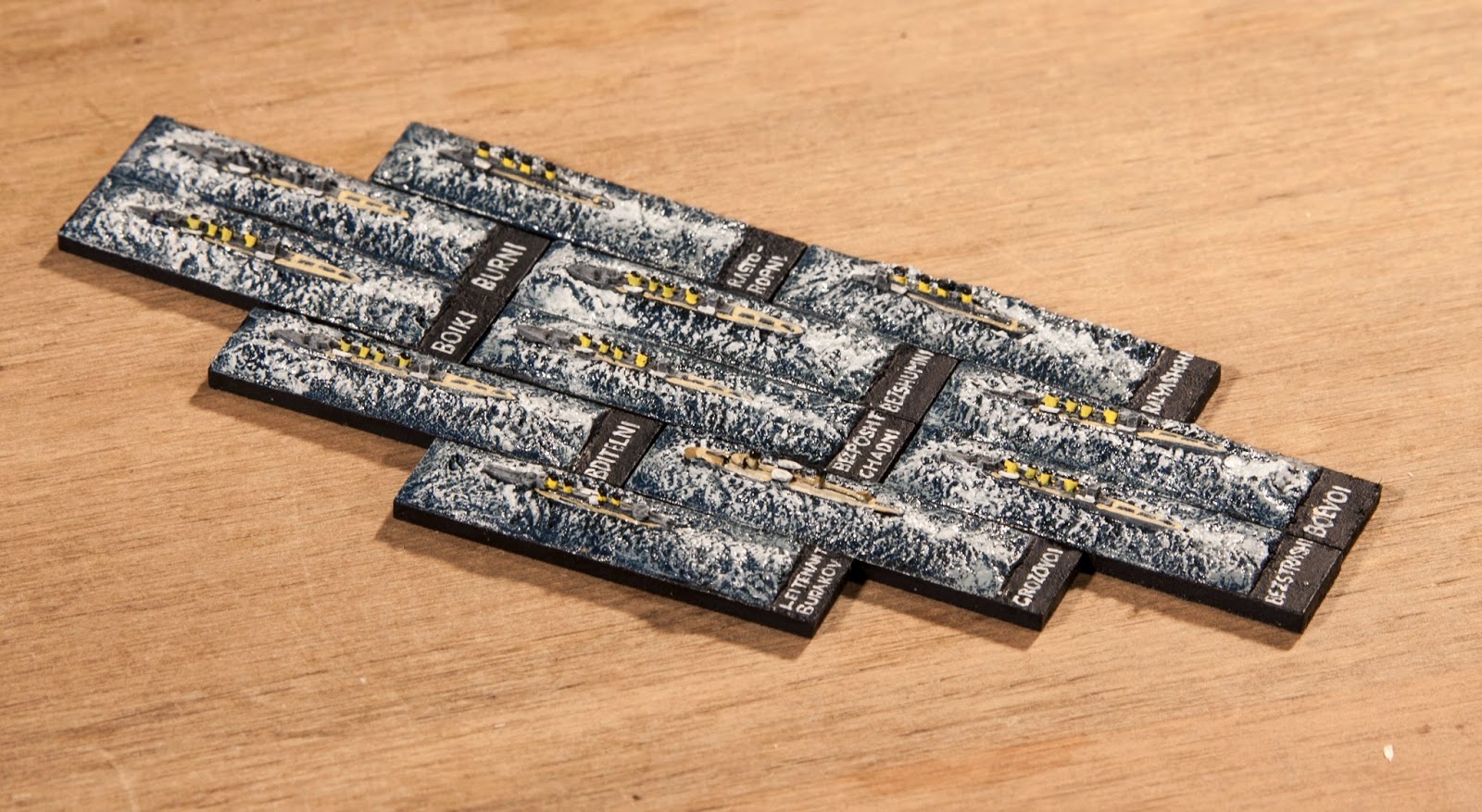
1st Destroyer Flotilla
(ODD Bditelni, ODD Bezposhtchadni, ODD Bezshumni, ODD Bezstrashni,
ODD Boevoi, ODD Boiki, ODD Burni, ODD Grozovoi, 
ODD Lt Burakov, ODD Rastoropni & ODD Razyashchi)


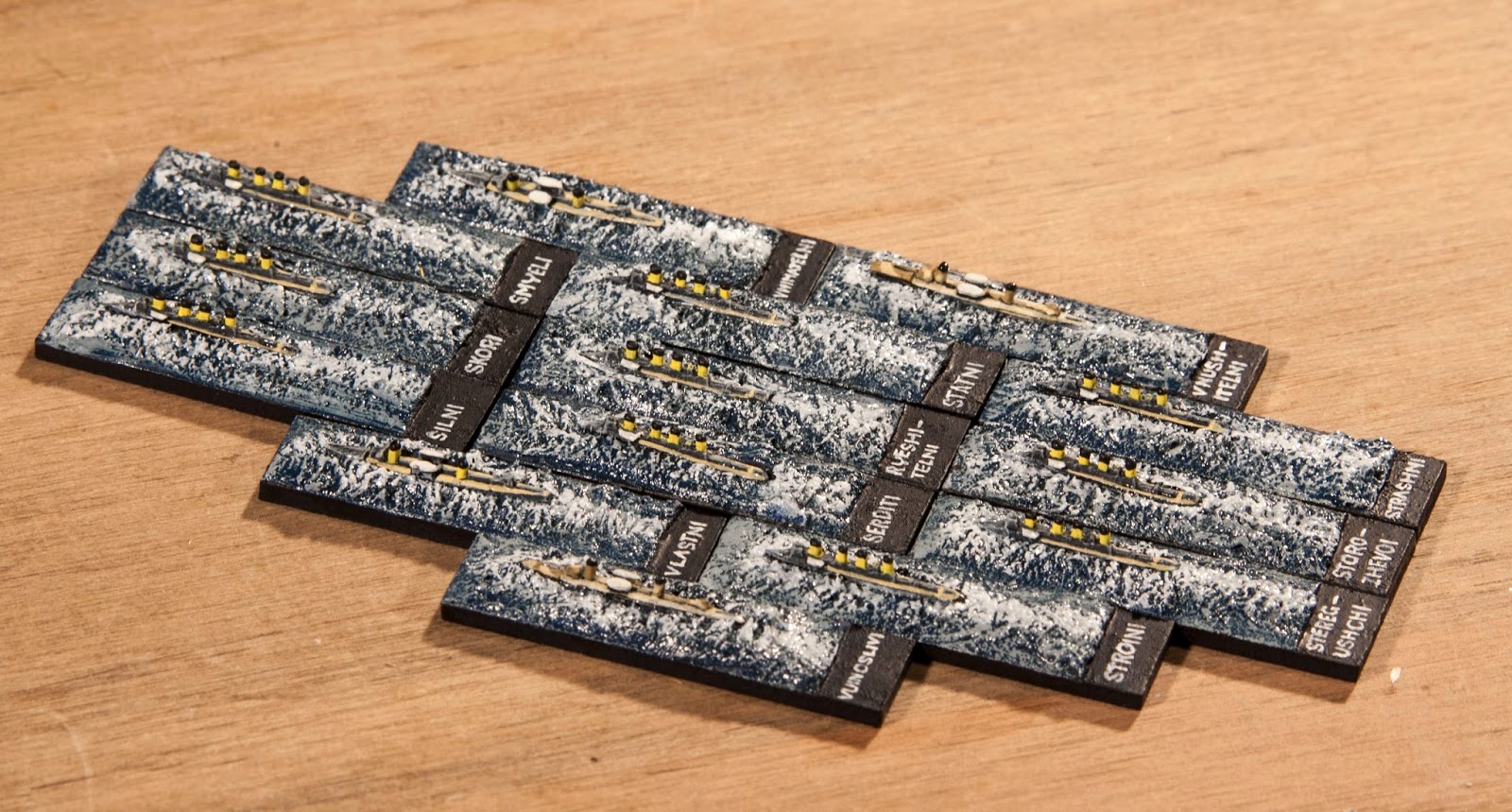
2nd Destroyer Flotilla
(ODD Ryeshitelni, ODD Serditi, ODD Silni, ODD Skori,
ODD Smyeli, ODD Statni, ODD Steregushchi, ODD Storozhevoi,
ODD Strashni, ODD Stroini, ODD  Vlastni, ODD Vnimatelni,
ODD Vnushitelni & ODD Vuinoslivi)


Auxiliary Vessel Tug (AG Silach)


Port Arthur Gunboat Flotilla 
(PG Grozyaschi, PG Gremyaschi & PG Otvajni)


Gunboat PG Otvajni


Torpedo Gunboat PG Gilyak


Gunboat PG Yenisei


Port Arthur Minelayer Flotilla 
(ML Mandjur & ML Amur)


Port Arthur Corvette Flotilla 
(PG Djigit & PG Razboinik)


Port Arthur Torpedo Gunboat Flotilla 
(PG Vsadnik & PG Gaidamak)

There is an enormous amount of assumptions and derivations over what colours the vessels of the Port Arthur squadron were supposed to have been painted. Perhaps the most well cited observation of the Russian Battleships were that they were painted a 'dirty cinnamon' colour which could have been a typical observation of Lamp Black which was a military black paint that had a brown hue to it. It was cheap and available in vast quantities so would make sense.

There are other citations that give all manner of browns as a colouring for the ships and some who have analysed photographic evidence of the era give a two tone colouring between a khaki and olive drab. This is the colour scheme that I opted for as it gave a more attractive look to the ships and provided some variety to the painting.

The Olive Drab can be mixed up with a healthy mix of Chocolate Brown, Olive Green, Silver Grey and Neutral Grey whilst the Khaki can be arrived at by mixing Chocolate Brown, Ochre, Silver Grey and Medium Grey.

I use Dark Sand and Light Sand to paint the decks and a Yellow Ochre for the funnels.

The smaller vessels are a mixture of the browns and blacks found on the larger ships. To provide some texture onto the flat areas of the vessels being painted I would use a lighter version of the colour being used and paint repeated strakes along the vessel sides...

The basing and painting of them will be covered in another blog post... 

In the meantime any comments are welcome..

Sunday, 7 December 2014

The Imperial Russian 2nd & 3rd Pacific Squadrons

So... after waxing lyrical about the sweaty desires I have had to paint boats with big guns I thought I should probably show you what some of them look like.

Here are my photos of the Russian Imperial Fleet's 2nd & 3rd Pacific Squadrons that sailed all the way around the globe (setting a record until the White Fleets cruise) to fall prey to Japanse Guns and Shimose!


2nd Destroyer Division
(ODD Blestyashchi, ODD Bezuprechni, ODD Bodri,
ODD Gromki & ODD Grozni)


1st Destroyer Division
(ODD Byedovi, ODD Buini, ODD Bravi, & ODD Buistri)


First Division
(OBB Knyaz Suvorov, OBB Imperator Aleksander III,
OBB Borodino & OBB Orel)


OBB Borodino


Third Division
(OBB Imperator Nikolai I, OBB Graf Admiral Apraxin,
OBB Admiral Senyavin & Admiral Ushakov)


OBB Imperator Nikolai I


OBB Admiral Senyavin


First Cruiser Division
(OCR Oleg, OCR Aurora, OCR Dimitri Donskoi
& OCR Vladimir Monomakh)


OCR Oleg


OCR Aurora


OCR's Dimitri Donskoi & Vladimir Monomakh


Second Division
(OBB Oslyabya, OBB Sisoi Veliki, 
OBB Navarin & OCR Admiral Nakhimov)


OBB Oslyabya


OBB Navarin


OBB Sisoi Veliki


OCR Admiral Nakhimov


Second Scouting Division
(CR Svyetlana & AMC Ural)


Attached Cruisers
(OCR Zhemchug & OCR Izumrud)


OCR Zhemchug & OCR Izumrud


AH Kostroma


AH Oryel


AE Koreya


AP Irtyusa & AP Anadyr


AR Kamchatka


PY Almaz


AT's Svir & Rus


The Auxiliary Squadron

So the key with painting miniatures of this scale is not to worry too much about the fine detail but to concentrate on the overall effect.

Whenever I see painted miniatures of this scale, there is always something that bothers me about what Im looking at. They always just seem to look so flat, and thats because there is no attention to fine detail... because in a lot of cases there is no fine detail to pay attention to. The way that I think I have overcome this problem with miniatures of this scale is that I paint a representation of planking on the decks of all my ships.

Not terribly accurate BUT makes a massive visual difference when you are looking at them with the naked eye!