Thursday, 10 May 2018

Wheres Wally? (or Waldo if you are in the States)

So... its been a while. 

A little over 5 months in fact!

In truth, I never stopped painting and in fact I've finally finished working on a big painting and modelling project that I had underway a little over a month into my blackout but I do have to admit that I think I was suffering from some sort of snow blindness where painting was concerned which slowed me down considerably towards the end of the year and through January.

...oh yeah and that's not to even mention that Christmas happened, during which I cancelled all holidays, worked through Christmas neck deep in heavy engineering works, literally turned my apartment upside down in order to fix problems that were springing up all over the place and having closed down a film and mixed media company almost a year ago decided that it was finally time to convert my office into a dyed in the wool Man Cave!!!

My 'work in progress' for the Obrona Narodowa '39 Intelligence Briefing I've been slaving over

Whilst all of this was going on, luckily I still found the time to polish off an entire Flames of War Polish Obrona Narodowa (National Defence) army for Flames of War, added a platoon of Korpus Ochrony Pogranicza (Border Protection Corps), as well as adding a few bits to my nascent Zulu army AND finish translating my first Polish military book on the 'National Defence' to help write an FOW vIII Intelligence Briefing which is now almost done... and just to add the cherry to the cream on the cake I've also just finished the first 28mm miniature that I've painted in over 15 years )and boy oh boy do I have some lost ground to make up on), completed ALL of the Slovak infantry I have planned for my FOW Slovak army and started painting my first Spanish Civil War 15mm Carlist Requetes for Spain in Flames as well! 

Well... blog posts and photos to follow... by the bucket!

So... its half way through May and I am now finally in a position to start posting again and I thought I would get the ball rolling by offering a few WIP's on the Intelligence Briefing and show you all what my Man Cave looks like now that all of the editing systems and camera systems have been retired and melted down for glue! (yeah OK, that was a bit dramatic... it was actually all sold off!).. and where it is I now spend my days slaving away!

The man cave in all of its glory!

I decided in December that I wanted to take down my giant double 30" cinema display Apple editing system that I was no longer using and replace it with some space to paint toy soldiers in. A very sensible choice I believe! So in place of my giant all space consuming technological financial black hole I decided that just a little bit of deskspace wouldn't be enough... so I emptied my entire office... which quickly spread to the rest of the apartment! Proof positive I think that I'm a bit OCD!

Anyway just a bit of deskspace wouldn't cut it so I decided I wanted some desktop organisers and after looking around for a suitable fit I ended up finding Hobby Zone, a boutique Polish company that were doing exactly what I was looking for. Not the cheapest in the world to be sure BUT they were well made and rugged and should be able to carry the weight of my ham fisted mishandling in the years to come!

Hobbyzone.pl

I replaced my old and functional Spirit Air airbrush with a new MIG Aircobra and a Harder & Steenbeck (Infinity) CR Plus because Ive decided its time my skills with the airbrush developed past the point of throwing buckets of paint onto models! I followed through on this with a new compressor and a worktop spray booth as well.

Airbrush Spray Booth, Compressor and gear with Vacuum Pump on the bottom

In the plastic container below the spray booth I have been able to store my vacuum pump which I uses for casting. Actually I bought this solely so I could cast up all of the stuff that I sculpted for use with my Black Brigade army but now I've got a hard on for other projects as well... My Slovaks will need a few bits and pieces and when I eventually reach my Dutch 1940's army they will need some stuff as well :D

Where the airbrushes are concerned my old and sturdy Spirit Air was good enough for the level of detail that I required but I decided that unless I start pushing my envelope I'll never be any better with the airbrush as a tool than I am now... and that really isn't very good to be honest.

So I palmed off my Spirit Air and Aztek compressor on one of my best friends in return for a fine bottle of Welsh Whiskey (Yup! That's right!!!) and instead bought a new compressor and two new airbrushes.

MIG Aircobra in the rear and the Harder & Steenbeck Infinity CR to the front!

...and of course there were the continual little bits and pieces that one buys to improve ones working conditions such as a bookstand and two new desktop lamps with daylight bulbs!... and actually the second one was a ball ache that took a looooooooooong time to arrive which is partly the reason that I didnt post last month when everything else was ready!

Bookstand on the right with the two new lamps taking centre stage with their daylight bulbs...

... Looks like I have plenty of paints lined up there on their racks doesn't it? Well in fact I have room for less than 1/3 of my paints with the remainder staying in the tool box under the desk. I basically chose all of the main ones that I use for racks just for convenience.

One good thing though is that with all of the drawers that I now have I was able to store almost all equipment that I use in them with the main stuff in the drawers in front of my painting space.

...and of course over in the corner of the room I store all of my solvents and effects fluids & pastes for handy access :D

Funky bottles... and stuff...

and between them both is where I store all of my brushes, superglues, pens, pencils..blah blah blah...

Windsor & Newton Series 7 brushes.... with all of the others as well...

BUT no man cave would be complete without ones coat of arms hanging on the wall! Ladies and Gentlemen, I give you; The Lions of Gwynedd!

The Lions of Gwynedd in all of their glory!

... and whilst we are the subject of all things Welsh, I like to have my poster of mythological Wales' 'Mabinogion' up on the wall next to my book case because its firstly nice to look at and secondly its a reminder of all of the 'Tales for Small Children' that we have! :D

Mabinogion - Tales for Small Children

... mind you, saying that, there is also a certain satisfaction with having a new bookcase in my office dedicated to military history and wargaming as well to top up on all other tales.

Books... BOOKS!!!!

Most of my normal, English language books are elsewhere in the house. For my own private pleasure I keep all of my wargaming books, my Classical and Archaic era books and of course anything Polish... well, I call it pleasure, others may call it torture but horses and courses and all that.

Now, for the last couple of years I have been forced to 'make do' with whatever I had in order to get the job done but as money eased off a bit recently I decided that it was time to replace a few of my tools or else buy some things that would just make my life easier.

When I started painting my Slovaks a massive cock up was conducted under my watch requiring a complete strip down and I wasn't keen on the time it would take to do it by hand so I decided to buy an ultrasonic cleaner. I got a VGT-1000 and I have to say I was REALLY pleased with the results!

VGT-1000 Ultrasonic Cleaner

The other item I decided it was long overdue for replacement was my dremel. For the last God knows how many years I had been using a cheap piece of yellow plastic that I couldn't control the speed on or even turn on and off without using the plug... I decided on taking the plunge and buying a Dremel 4000 with a workstation that turns it into a Pillar Drill as well.

Dremel 4000 with the Workstation 220 to the left
and of course where would a wargamer/blogger/modeller be without an ability to photograph all of his latest efforts?

Well, seeing as I have surrendered my usual painting location to 'she who must be obeyed' I decided I needed an alternate way of doing what I needed, so I decided to purchase a portable and collapsible studio. I already have one of course but it really is an awful piece of crap so I decided to go for broke and buy a Foldio 3 kit with turntable and extra lights.

The complete Foldio 3 kit with Halo Bars and 360 Smart Turntable
... of course nothing worthwhile comes trouble free and true to form the geeks in the Foldio lab decided that the UK would never be a good enough market to provide any version with UK plugs so I had to buy the US version and Step Down Converters to modify the UK power supply to the drip fed US supply.

However when you see the photos on the forthcoming blogs you will see that it was worth the money!


... that pretty much covers all of the tools... I guess its just about storage now:


This is where the majority of my stuff is stored at the moment and I have room for one more filing cabinet and one stack of plastic boxes side by side for expansion. At the moment I still have the majority of the end cabinet free with only three drawers being occupied. There are also plenty of the small drawers available for 6mm and 10mm Austrian and French Napoleonics and my nascent Zulu War army.

The plastic boxes are a Godsend however. At the moment they are crammed with boxes of figures from a couple of other game systems such as Prodos' AVP and Flintloque and Slaughterloo armies and such like. Ill be cramming a new pile with scenery and Photo-etching equipment at some point soon as well... just one more ridiculous project to suck up my time in the near future... but oh the possibilities!

FIX BAYONETS!!!!!!


Wednesday, 9 May 2018

FoW: Obrona Narodowa (National Defence) Platoon

So these guys are the somewhat unsung heroes of September '39. Along with the State Police (a.k.a The Blue Police) these guys were all over Poland fighting in almost all of the battles... but just like the Blue Police, nobody really seems to give them the credit they deserve.

For me they represent another opportunity for a funky modelling project where I get to put something together that looks a little different from the average so let me run you through a little bit of history and then I'll take you through how I put my ON (Obrona Narodowa) platoon together.

The History of the Obrona Narodowa

The Obrona Narodowa (ON) was a territorial military formation that existed between 1937 and 1939. It comprised a system of Brigades and Demi-Brigades which were each assigned to District Corp Headquarters where in times of need they would be subordinated to specific Polish army groups based on perceived local needs.


The decision to establish an organisation of National Defence units was taken in December 1936, with service in the ON units being based on the well known principles of our own Territorial Army. Initially the National Defence units service was performed exclusively by volunteers of Polish nationality, unrestricted reserve soldiers and the unemployed. The basic organisation was by the Battalion with varying levels of manpower depending upon which model of battalion you were serving in; Types I, II, III, IV and S (there was also a Cavalry ON brigade as well).

Formation of the first ON Battalions began in January 1937 with Reserve Troops populating the territorial system and initially formed on the instigation of each of the District Corps, depending upon whether or not there was a perceived need for more manpower at that time.

National Defence formations were equipped with a variety of uniforms and equipment, rarely modern at inception, although by 1939 many Battalions had been issued uniforms that were to a larger degree identical to the regular army with the exception of formation markings.

Formations of the ON were provided for the short term defensive activities of any given area whereby the ON would assist in the defence of their own homes and other short term defence tasks when under favourable field conditions, principally with the support of regular troops.

ON troops participating in the Zaolzie occupation 1938
It would seem that when the ON were deployed as envisioned they performed admirably though if, through events beyond their control, they were pulled out of their comfort zones and expected to operate in a wider tactical environment their lack of weaponry and training would start to tell very quickly, frequently precipitating a collapse in morale.

When the second world war started Poland was able to mobilise a total of about 83 battalions with a total strength of about 1500 officers and between 50-60,000 NCO's and Privates.

Sequence of Events in 1939

7th April 1939: A root and branch reorganisation of the ON started to take place with the issue of order L. 1022/Tjn which dealt with the theoretical strengths and mobilisation plans for the ON.

2nd May 1939: The start of the physical establishment of the ON Battalions followed soon after with order L.dz 1600/ Tjn. HE. and L.dz 1601/ Tjn.

New brigades were established and existing ones expanded and in place of the original organisational TO&E's 1,2,3 & 4 the following organisational TO&E's were introduced:

Brigade Headquarters (demi-brigade) ON type I
Brigade Headquarters (demi-brigade) ON type II
Battalion ON Type I
Battalion ON Type II
Battalion ON Type III
Battalion ON Type IV
Battalion ON Type 'S' (Fortress Garrisons. June '39 mobilisation of 12 such battalions was planned)
Company ON Type 'KS' (Cyclists)
Company ON Type 'K' (Cyclists)

The breakdown of a Type IV Obrona Narodowa Battalion

10th May 1939: The commander of Corps Area Command No. VII in Poznan issued order L.dz 2398/ Tjn.Org.ON outlining the creation of ON units in the Corps area.

31st May 1939: Brigadier General Kazimierz Sawicki was appointed General for Unit Affairs and Head of the National Defence Agency whilst also retaining the post of Director of the State Office of Physical Education and Military Training.

10th July 1939: The N ational Defence Department is legally separated from the M.S.Wojsk Infantry Department, and is subsequently integrated into the National Defence Agency.
Head of the Obrona Narodowa - Lieutenant Colonel Jozef Zoncyk-Bohusz
Head of Organisational Documentation - Capt Kazimierz Gustaw Czermak
Head of Budget - Captain Stanislaw Marian Bigo
Head of Department - Major Tadeusz Wiktor Rozek

27th July 1939: The Office for Units of the Army issued an order 136/ Tjn. for the formation of ON artillery platoons

28th July 1939: The Office for Units of the Army issued an order 182/ Tjn. for the formation of Gdynia ON Battalion III and the reorganisation of Gdynia ON Battalion II and Kashubian ON Battalion to the Type IV organisational structure

2nd August 1939: The Office for Units of the Army issued an order 183/ Tjn. for the formation of the Dabrowa ON demi brigade

25th August 1939: Brigadier General Bronislaw Regulski was replaced by the Minister of Military Affairs due to a combat alarm carried out by units of the ON.

29th August 1939: The Office for Units of the Army issued an order 349/ Tjn. outlining the change of command organisation for the Poznan and Podhale ON Brigades from Type I to Type II.

29th August 1939: The Office for Units of the Army issued an order 183/ Tjn. for the formation of the National Defence Brigades in Warsaw.

That brings us up to the war....

Owing to the precipitous collapse of the Polish front lines at the start of September the ON were frequently called upon to fight outside of their local environments in circumstances that were not suitable for their organisational imperatives. The most effective battles that the ON waged were when they were fighting for their 'little homeland'. 

This is labelled as an ON section launching an attack but I am almost certain that this is a Cavalry section.
The troops are all wearing cavalry boots and the soldier in the foreground still has spurs on his boots.
In the German overrunning of Army Pomerania (Armii Pomorze) to the west of Bydgoszcz on 2nd September 1939 the ON Battalion 'Koronowo' is a good example of what well led battalions could achieve when fighting for their homes.

With the Polish front line having been overrun by German armoured thrusts the Polish 'Koronowa' ON battalion was all that stood in their path. Without external support they fought off a succession of German waves holding back the entire German 3rd Infantry Division until all ammunition was exhausted. When the ammunition had run out Major Wrzesinksi took the decision to order a bayonet charge instead of a withdrawal. Nobody considered capitulation. They fought to the very end with only a few managing to escape the carnage.


ON soldiers... actually in Greatcoats!
Similar resistance was made by many other battalions throughout Poland although few will come close to the extreme valour demonstrated by the ON Battalions that fought with the Naval Rifle Brigades around Gdynia, most especially on the Oksywie Kepa where 15,000 troops dug themselves into a local hillside and forced the Germans to literally dig them out having to wage over 100 individual  battles over a 10 day period up to 19th September when the commander Colonel Stanislaw Dabek committed suicide and the remaining troops laid down their arms. Kazimierz Pindel wrote: "All Coastal Land Defence forces have been completely destroyed. There was no surrender at Oksywska. The struggle of the few Coastal Defence Troops in comparison to the German forces continued until their destruction by the enemy!" 

The troops did actually eventually surrender, but only when ammunition and food was exhausted, medical supplies were non existent, casualties had risen to over 40% and a complete organisational breakdown had been forced upon the defenders.

Despite what the world may think, Poland was no pushover!

Sadly a lot of the troops serving with the ON were murdered either on the field of battle, or most especially in prisoner of war camps where the ON's efforts to suppress German 5th Column activities drew savage reprisals from their captors. There were a number of officers of various battalions who actually suffered the indignity of being guillotined.


Uniforms


Miniatures portraying some Obrona Narodowa soldiers from 1939 in older pattern uniform items.

The outfitting of soldiers of the National Defence organisations was along the same lines as those of the regular army with the ideal kit being provided being the same as that provided to regular army soldiers.

The reality was somewhat more disparate however with the Brigades frequently, and especially at inception being issued with older pre 1936 military uniforms. As time went by and war approached however replacement of these older uniforms for the newer post 1936 model became more accelerated. Because of this I will only address the more outdated uniforms issued to the ON as, other than ON markings the modern uniforms bore no noticeable difference.

A fine artists impression of an older uniformed Obrona Narodowa soldier of 1939
There were small differences in the uniforms between the ON and the Regulars however, even with the most modern uniforms. So to detail the uniforms:

A typical ON uniform but with a wz.36 helmet
Headwear: Other than the rogatywka cap that the troops habitually wore the ON were issued with old world war 1 era French Adrian helmets. These were eventually replaced by the more modern wz.1936 helmet as war approached.

Upper Body: A standard 'kurtka sukienna' (cotton jacket) was issued. The more modern wz.1936 issue jacket would have been issued as war approached but for wargaming purposes there is practically no difference. Their cotton greatcoats or sleeping blankets would be worn rolled across the chest, over the shoulder and tied together with the other end just above the belt. 

Lower Body: The cloth trousers of the ON were typical of the era and were tight laced around the calves, ballooning out above the knee. One of the most identifiable things about the ON uniforms however was the leg wraps. As opposed to the puttees of most European armies by this time the Polish were still issuing long cotton strips of fabric that were tied around the legs, starting just above the ankle and being tied off below the knee. Even when newer uniforms had been issued many ON formations still retained the use of these wraps.

Feet: The ON were issued older black leather ankle boots. Nothing much to say here. Exactly as it says on the tin!

Equipment: The equipment issued to the ON, such as the webbing, harnesses, ammo pouches and rucksacks etc. was exactly the same as that issued to regular infantry. The older gas mask tin was issued as opposed to the newer canvas bags but other than that there is no practical difference for a wargamer to worry about.

Armament: As a militia organisation that was tasked with defending hearth and home the ON did not have access to the newest weaponry the Polish army was being equipped with. However they were not bereft of heavy weaponry and/or support weaponry that many suppose although much of it had been reallocated before the war started. Some ON Battalions were very well furnished, such as those in the Karpaty whilst others such as those up in Grodno were somewhat bereft.

Typically the personal weapons issued were old French Mannlicher rifles of World War 1 vintage with a smattering of equally unPolish lmgs, such as the French Berthier's. As time went by more BAR's were issued although they kept their French rifles. Ammunition on the field of battle was to be a perennial problem.

Insignia: The ON uniforms had no insignia on them other than the coat of arms of the Obrona Narodowa and a collar flash of white over red cut diagonally on both jackets and cloaks. The older Adrian helmets could also be found sporting the Polish Eagle, although the majority of these had been removed by the time war broke out. Ranks were carried on epaulettes just as with other arms.  

Modelling the Obrona Narodowa

Organisationally speaking the ON Type IV Battalions were a bit different from the average Polish company. Each company, as expected would contain three platoons each of three sections... but this is where the similarities end. Each section was only 15 men as opposed to the normal 19. There is questions as to how many LMG's the platoons would have access to as well although just for variety I've included a base in each section with a team.

So, I can obviously just choose to repurpose my normal piechoty for use as Obrona Narodowa should I choose but I just can't help feeling that I would be missing out on another modelling opportunity and a chance to field something  just this side of funky!

The full Obrona Narodowa platoon in all its undermanned and undergunned glory!

I decided that I would opt to model and field an ON platoon equipped with the older uniforms that were initially issued in 1937. That would mean the older Adrian helmets, leg wrap putties, rolled greatcoats/blankets and an assortment of weird and wonderful weapons (OK so practically this would just mean an alternative LMG)

A full section of 15 conscripts advancing, waved on by their NCO in the middle.

I cast my eyes about the wargames world to find some options. Generally speaking the armed forces of the world of this time period all wore similar uniforms that could be nicely done with a little nip and tuck. One option was obviously the True North National Defence troops which is a manufacturer I normally swear by but I just wanted to try something different, and in any case the True North ones have been sculpted without the leg wrap putties, in fact the only difference here would be the helmets and at the moment I am very taken with my chosen alternatives.

A closer look at one of the LMG bases

I settled on the Carlist range of Spanish Civil War miniatures by Peter Pig, whose heads I quickly removed. These were then replaced with Adrian helmet heads, again provided by Peter Pig and Czapka heads, also provided by the same. 

A closer look at the platoon command base.... complete with their very own Catholic, cross toting nutter!

It would be nice if they actually sculpted Rogatywka heads, which is what the Poles actually wore in the field as opposed to the czapkas which were actually chiefly worn with dress uniforms, parades and special functions... for a lack of an alternative I had to go ahead and use them anyway. 

An excuse to have a closer look at one of the Sergeants

The benefit of the Carlist miniatures is that with the exception of water bottles these miniatures wear the correct form of belt, harness and ammo pouches, have leg wraps, have the blanket/greatcoat rolled across the body and sling the rest of their bags in almost the same way as ON troops. They were an ideal fit once all of the heads had been replaced.

A look at the rear of the soldiers showing to good effect their rolled blankets, leg wrap putties, Adrian helmets and packs.

Given that the Poles are a bit Catholic nutty and I figured it would only have been worse in 1939, especially given the fact that they were having their own Jewish pogrom before the Germans even bounced across their borders I thought I would keep the Holy Cross touting Carlist and use him as a proxy banner bearer along with two officers. 

A decent view of one of the sections advancing straight towards the camera crew :D

Unlikely this would ever have happened in a real battle of course but I do like the idea of a hard pressed ON battalion being brought back to the fight by a lonely officer or NCO hauling a cross into the air, planting it firmly in the ground and urging his men to take not one further step backwards!

Anyway apart from that all of the painting was completed as with everything else Polish that I've done and just so with the bases!

The whole platoon viewed from the front, command in the background!

So Im left with the feeling that this particular little force went so well that I decided to go ahead and order one more platoon of Carlists, and enough weird and wonderful troops types and heads to allow me to create 2 HMG teams, 1 mortar team, 1 anti tank gun team and three horse drawn wagons of typically rural types... I just cant help adding these little projects!

Its no wonder I never seem to finish anything! :D

FIX BAYONETS!!!!!!!!!

Wednesday, 8 November 2017

What do we need to see in a set of rules?


I just had a really interesting conversation with Alex from the Team Yankee Facebook community and it was actually so interesting for me because it's probably the first time I've put into words the different things that I believe I need to see in a game before I will buy into a game.

I thought I would offer it up to the community as a whole for a discussion on it.

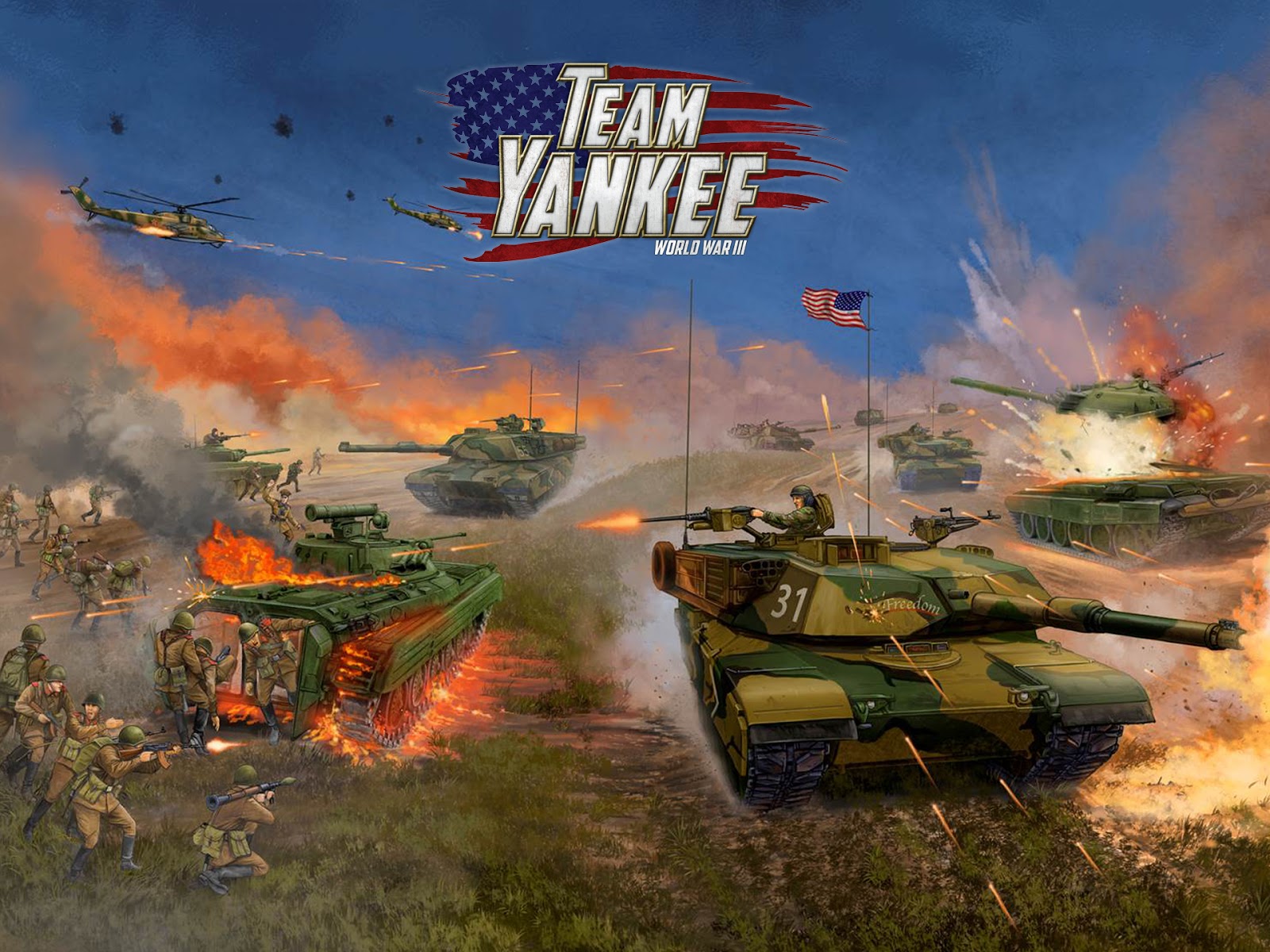
For those of you who are not aware, Team Yankee is a Cold War wargames system produced by Battlefront, using a new(ish) system that Flames of War has been completely rewritten into, which has had the majority (or at least an over indulgent slice) of the community up in arms due to a perceived divergence from historical acceptability and a claimed over-abstraction of reality into a set of rules that bear small resemblance to historical occurrence... or at least that's the argument from at least one side of the community.


Ambrose T Burnside
Despite the beauty of the miniatures on offer I had concerns about buying into Team Yankee when I started seeing all of those photos out there with peoples solid walls of tanks lined up and moving across a table. In the real world this has never happened, could never happen and will never happen unless somebody as inept as Ambrose T Burnside was suddenly resurrected and given command of an entire Soviet Armoured Corps, conveniently placed across the battlefield from an Italian or Spanish Napoleonic army (or else some other army renowned for showing the enemy their heels)... which of course will never happen!

I probably don't need to say this but the quality of miniatures that so many of us crave can now be met, along with an ever diversifying and dizzying supply of art materials to enable the dedicated among us to, after some graft, produce some beautiful pieces of work that just look amazing on the table... but is this plethora of beauty aptly supported by the games systems that are supposed to be supported by these miniatures?

An image of wargaming beauty...


So, this raises another question; 'just what is it we need to see in a set of rules before we will commit all of this artistic endeavour to them?'


Now, I was around for the Wargames Research Group days in the late 70's and 80's when a group of crusty ol' duffers sat around a table and decided that all wargaming should be done for the purpose of historical simulation, drew up lengthy tables of numbers and grammatical punctuation and spent the whole day chewing on cucumber sandwiches, debating the wisdom of invading Russia (or the Soviet Union) in the winter (or as one could more conveniently say; their Christmas holidays!)!!!


Apparently those that Pol Pot left alive
were never taught about grammar
A worthy aspiration to be sure, but as dull as ditchwater and if the rose tinted spectacles of the past are removed and the big stick with 'reality check' written down the side applied sharply to the back of ones head, we have to admit that these methuselahs probably did more damage to wargaming kudos than Pol Pot did for democracy in Cambodia!


However those dark days of autocratic, modifier toting, number crunching geekdom are behind us now, and modern manufacturing techniques, the relative skills of miniature sculptors of all scales and a whole plethora of art materials has enabled something akin to art, crafts and beauty entering the dark closets of us wargaming anoraks out there as we constantly rub our sweaty palms up and down our pant legs as we browse through (web)page after (web)page of miniatures!

So what about the rules then?


One categoric fact needs to be stated before I go into this, and I feel that this needs to be stated right at the start for the simple reason that far too many people use this throwaway comment when this particular subject is being discussed and/or debated, and that, ladies, is: 'Well we have to accept some level of abstraction in the rules!' YES! Of course we must expect a degree of abstraction in the rules that we game.

Abstraction is the first point, chiefly because this is such a bloody blindingly obvious thing to say that even the three blind mice could have left their three blind white sticks on the three blind mice trap and calmly went back about their incredibly three blind way through any given three blind conundrum you decide to throw in their three blind way would be able to see this! Anybody and anything can see this! Even a blind thing that is so ridiculously blind that it spends all of its time being blind, eating blind food and sleeping blind sleep you blinding bloody idiots!


OK rant over! Abstraction isn't just an obvious thing to point out it is in fact so fundamental to the writing of a set of rules that one could actually say that its the skill of abstraction (and not the abstraction of skill) that a smooth, fun, pseudo accurate set of rules relies on. This then could be said to be one of the key pillars in determining which rules are rugged enough to stand up under a cursory scrutiny. No abstraction =  No rules. Fact!

How far can abstraction be taken  before a game is reduced to farce and becomes nothing more than an exercise in rolling dice against each other with little regard to statistical probabilities? I suppose the question is; at what point does abstraction force on us a loss of historical or genre flavour?

Really? REALLY? 
This loss of 'flavour' is where, I suppose, the first of my 'pillars' of a good rule set lays. It is, I believe, the 'aesthetic' that will initially attract any given geek (and I use this term loosely of course. In fact so loosely that it encapsulates a diversity of character ranging from the old Prussian military aristocracy, English science fiction authors (H.G Wells for those of you who are unenlightened) all the way down to the disgusting sweaty 12 year old acne ridden gimp that is too embarrassed to take his unicorn out of his mothers walk in wardrobe!). It is the aesthetic that initially reaches out and says "Oi! You! Come and deliver your dice to the table as if you were the living left hand of God itself!" If the aesthetic doesn't meet your approval its likely to be a game you will bite your thumb at (Mercutio: Romeo and Juliet) shouting "Jog On!" (Simon Pegg: Run Fatboy Run. See what I did there? Diversity of culture never hurt anybody right? Well, unless you live in the Belgian Congo of course, you may be in trouble for liking Simon Pegg out there!).


Just because...
Think about this for a moment. Picture yourself at a convention or your local club. How many tables have you walked past without stopping because 'you aren't into Western games' or 'Ancient games' or Naval games'? As a moderate, reasonable and equitable person a lot of us would likely check ourselves at this question and say 'Damn! I should really have checked out the rules first, just to see if its something that I would play', but lets face it, in a modern age time is precious, and certainly too precious to be playing games that don't deal with your first love! (be that history or Sci Fi/ Fantasy)...so No, we just wouldnt. If it isnt our 'thing' its already on a loser!


A game that may just have some flavour!

Where aesthetics are concerned, I think it may be fair to say that its the overall aesthetic that draws us to a game initially but its the narrative function that keeps us coming back for more.

Now, narrative function all of a sudden makes a wargame sound more like a Hollywood feature film script. Absolutely no substance at all unless you are prepared to pay top dollar...  but lets face it; until very recently in the wargaming world it was the independents that initially blazed the trails. The Indies that trialled new rule mechanics and attempted new ways of combining abstractions... Just check out Flintloque by Alternative Armies or Rapid Fire or Gruntz if you want proof of this statement!

Now of course we have all the Corpocrats and their boxed games with only marginally tested rulesets and a half life of less than a Crisp Sandwich!

Damn straight!!!!
Can anybody remember Rogue Trader when it was vogue? How signal it was as a ruleset and how it opened up an entire universe? EVERYBODY knew Citadel then, and everybody with even the vaguest stirrings of a Sci Fi fetish had played games of it. I myself had myself whooped on a number of blood soaked occasions! Warhammer Fantasy was already hitting 3rd Ed. when RT was released so there was already a pretty strong grass roots following but just as it was then the same is true now. A grass roots movement that supports a set of rules is how a REALLY good set of rules grows, because its the community that is the benchmark and safety check for how a set of rules is developing.

Now witness the collapse into farce that 40k suffered after 5th edition (ironically coinciding with GW's separation from its own community and relying on the white collar criminals (sorry, of course I meant community conscious wardens of the company who have absolutely no interest in targeting games at 7 year olds and targeting prices to their parents pocket - In  fact this does make me think that wargaming 40k and demanding to be taken seriously is a bit like reading the Sun and expecting a place on the Executive Board) to develop all of these wonderful (cough, splutter) rule sets that (along with an utterly insane pricing model) caused so much resentment in its own core market.

Has Flames of War gone the same way? Well in my considered opinion (and I'm not claiming to know much less than everything but much more than anything) it isn't too late for the Flames guys to fix things. I don't necessarily think that the TY system is a bad one, I haven't played it yet so I obviously have no right to comment and in any case ANY changes will draw criticism from someone, but so long as the game is served and by extension the wishes of the community they will, I hope, be in rude health for the future. It would be a crying shame to lose Battlefront to the siren call of Form under Function

But I digress;


A game possibly lacking in flavour?
What I mean by a 'narrative function that serves' is not in fact films by Harvey Weinstein but is more a reflection of how smooth the gameplay of a set of rules is. A measure of how much of your willing disbelief you are prepared to suspend for the short term in order for a game to be completed and pretzels successfully thrown at all losers. How interesting does the recital of the facts prove to be, although this particular point is perhaps more to do with the difference of whether you find more identification with a corporate negotiator or if you fit into the shoes of a used car salesman! Just how much of a storyteller are you? The enthusiasm that naturally bubbles to the surface following a really good, interesting and gripping game however is very difficult to fake, and it will of course rely on a plethora of factors, such as how much you like the people you are gaming with, how lighthearted the company is, and whether or not you have had your morning ablutions... there is nothing worse than the results of an entire game resting on a constipated die roll!.. and maybe nothing more gripping? But when all is said and done however can we at least agree that a bad set of rules will rarely generate any excitement much less the enthusiasm to talk about it to all whose eardrums look ripe for a bashing!

Because of these considerations the Narrative Function represents the second pillar of a good set of rules for me!

The technical aspect of a rule set comes next for me. Pillar No.3. Essentially this is the nuts and bolts of the rule themselves. The pieces that make up the whole. The use of statistical probabilities to bring an abstract reality to the table top. It is very difficult to justify a set of rules that claim to mimic reality (and in this case I mean serve as a representation or in the case of Sci Fi and Fantasy games an mimicry of an historical event) if they have thrown all statistical probabilities out of the window... although one also has to bear in mind that if rule sets were written solely with the purpose of historical simulation in mind then if the statistical probabilities were adhered to you would likely have a very boring set of rules with very few casualties and an awful lot of people running away!


This is a difficult one because some good rulesets are very complex with lots of rules, and therefore lots of technical elements, whilst on the other hand there are also lots of simplified rulesets that abstract the majority of the technical quantification into meta-systems. Both types of rulesets can be very good, but sadly far too many of them are very bad with nowhere near enough forethought and play-testing to failure.

Fog of War?
Where this is concerned it should be emphasised that if the groundwork is done on the Technicals then the abstraction shouldn't matter because with the occasional exception of aberrant results the rest of the abstracted results are close enough to historical occurrence to maintain a players suspension of disbelief, so long as the aberrant results do not become the predominant result.

Despite me only addressing this in such a short fashion it is the Technicals that will cover processes such as command and control, fog of war, shooting, casualties, movement, morale and game housekeeping. It is these nuts and bolts that need to be really REALLY nailed down well if the rules have any hope of 'making the grade'

The final pillar for me, Pillar No 4. is the Rules Mechanics. What is the difference between the mechanic elements and the technical elements I hear you ask? Well, this is an arbitrary term of description chosen by me, but it does allow me to separate my own thought processes when I'm writing rule sets.

The mechanics is what stitches all of the technical elements of a game together resulting in how the game flows. We must have all played those games where all of those different rules were excellent and made so much sense but when you put it all together it was just a heavy and slow, unwieldy system? Right?

Some wargames are winners!!!
What about those systems where all of those rules that you read ALL seemed to make perfect sense and then when you played the rules they just flowed. Easily and without obstruction? Now THAT is a set of rules that has well chiselled abstraction at its core!

Abstraction is supposed to simplify reality... not break the rules of physics so for me when I see a common occurrence in a game where an abstraction routinely breaks reality, to me this is a real cause for concern and is very likely to diminish any interest I can work up for a game.

Where Team Yankee is concerned, with its habitual 'tank bricks' this is an extreme example of an 'abstraction fault' and I have to say that I was living in West Germany at time of the military exercises for Operation Lionheart and I have to tell you, at no time did I ever see, or even hear of British, nor American nor even West German armour bricks rolling across the German countryside.


hang on a minute....
Mike (McSwiney of Miniature Ordnance Review) has kindly taken the time to explain that this problem occurs because of the scaling of the game. Now this is a funny one because this is actually a VERY common practise in wargaming which I will go into in just a sec. Apprently the game designers decided that they would design a game with a 'sliding' ground scale that was more appropriate for 6mm to 10mm Miniatures but would instead use 15mm on the table.

Now admittedly this sounds like an obscenely stupid idea. A bit like making the Duke of Wellington and Napoleon fight the battle of Waterloo but replacing their armies a lot of Colossi of Rhodes!

British GPMG operator on deployment
However when you consider the games that you already play you may be surprised by what you find. A British GPMG (General Purpose Machine Gun), a 7.62mm death dealing hammer of the Gods will go through a solid brick wall AND still be able to kill a man at over a mile and a quarter. At 1/100 scale (or 15mm to the rest of us yokels) thats a distance of 20 metres on the wargames table, or in this case a school gymnasium! Utterly impractical for wargaming purposes. A Thompson submachine gun had an effective range of 150m. At our scale of discussion thats a range of 1.5 metres... again utterly impractical. When you scale up to 28mm and start playing stuff like Bolt Action just think what that implies.

It is an absolute necessity to reduce the ground scale of a game to bring all weapons within the reach of a table. This is also carried over into the Artillery of a game.

Do we know any games out there where the majority of weapons in a game have practically unlimited range? If not why not?

However this Ground Scale Abstraction has its collateral problems and where Flames of War and Team Yankee are concerned, in my opinion its the tank bricks.

Win!
Now, there is a silver lining to this massive problem and that is the control of points values on a table. Apparently if you limit the points value of a game relative to the table size being played across the games can play very well. For me the jury is still out on the rules, at least until I play them. They look fun, I just LOVE the models, Ive been put off by the abstraction fails BUT with good control of the game it looks like it may be a winner. Time will tell.


So to summarise; for me there are four pillars that underpin a majestic set of rules.

i) The Aesthetic. Probably the easiest to get right, and capable of attracting a lot of new blood
ii) The Narrative Function. Based more on personal skills than ruleset elements but if it isnt achieved the game will likely die very quickly anyway no matter how good the next two pillars are.
iii) The Technicals. How well thought out and rugged each of the component parts of the rules are. If you cant get these right then the rules are as good as dead anyway
iv) The Mechanics. How well does it all stitch together? Have the abstractions that are written into the rules reinforce the technicals or detract from them?

The first pillar can be taken as a standalone element that may not really have too much impact on the following three pillars BUT the next three fulfil a circular function and if there is a break between any of them, then the rules themselves breakdown.

I personally have a problem when I see a break between the narrative function and the mechanics especially because when I see this I believe that the game isn't serving the aesthetic and if there is a break between these two pillars you will end up where Games Workshop is now, with their 4 page toilet paper rule sets.

So thats my thoughts on what has to go into a set of rules and what may make or break them.

What do you guys think?

Is there any room for a Bayonet in all of these postulations at all?

Fix Bayonets!!!!